How Dental X-Rays Help Detect Problems You Cannot See
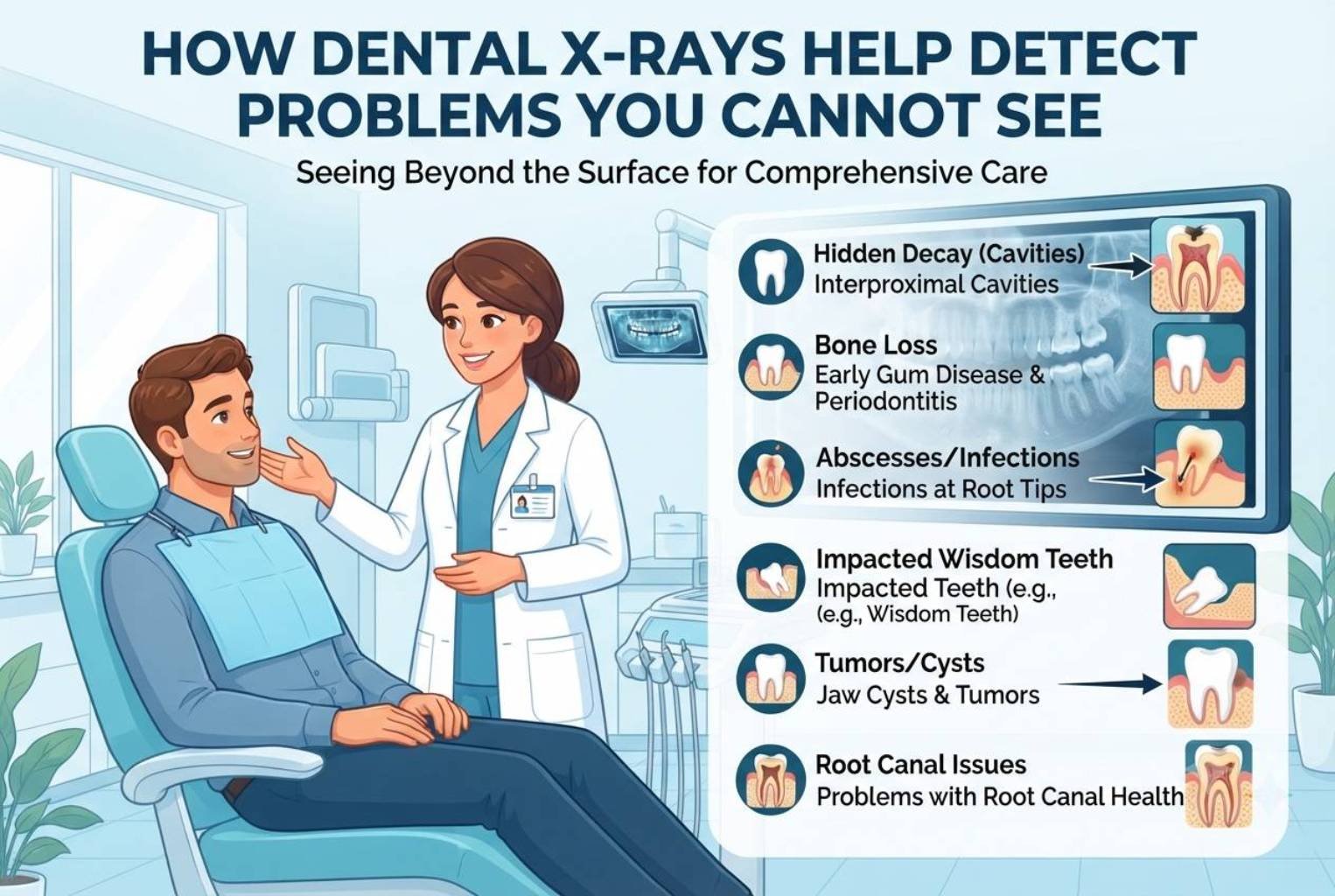
Dental X-rays help dentists identify issues beneath the tooth surface. They may expose decay, infections, affected teeth, and changes around tooth roots. Some dental diseases can occur without any noticeable symptoms. X-rays provide useful images of areas that cannot be seen in routine check-ups. When necessary, your dentist may prescribe imaging.
Why a Visual Exam May Not Be Enough
There are some dental issues that are hidden behind teeth and gums. X-rays can be used in a dental clinic near me to detect these issues. This helps in proper diagnosis and early treatment.
Hidden Cavities: Some cavities develop between teeth, making them difficult to detect during routine visual examinations alone.
Root Infections: Tooth root infections can be hidden by gums and need imaging to be seen more clearly.
Bone Changes: Bone changes may take place beneath the gumline without any noticeable symptoms.
Affected Teeth: X-rays may show teeth trapped under the gums or in the wrong position, which can lead to complications.
Detecting Cavities Between Teeth
Cavities between neighboring teeth can remain difficult to notice during a visual examination. Decay is detected in these small areas with the help of bitewing X-rays. Early detection helps dentists schedule appropriate treatment. A dental clinic in near me can recommend imaging based on your needs. This will assist in maintaining good tooth structure.
Finding Problems Around Tooth Roots
A dental clinic near me suggests X-rays to check the tooth roots when the symptoms do not disappear. Such images may reveal infections, abscesses, or bone changes beneath the gumline. They assist dentists in identifying pain that cannot be observed when examining the patient. Treatment planning may be facilitated by root imaging. This may guide appropriate care.
Identifying Impacted Teeth
Affected teeth can be stuck under the gums rather than erupting normally. This is a problem that usually affects wisdom teeth. Their position, angle, and relation to nearby structures can be seen on dental X-rays. Imaging is used at a dental clinic in near me. Dentists use this information to plan appropriate treatment.
Checking Bone and Gum Health
A dental clinic near me can examine gum and bone health. X-rays show hidden bone loss around the affected teeth. These images demonstrate the effectiveness of tooth support. They can assist in tracking the changes associated with gum disease. Dentists combine such findings with examinations to determine the right treatment.
Common Dental X-Ray Types
Bitewing X-Rays
Bitewing X-rays are images of the upper and lower back teeth. They assist dentists in detecting decay between adjacent teeth. These pictures are usually utilized during regular dental check-ups.
Periapical X-Rays
Periapical X-rays show an entire tooth, including its root and surrounding bone. They can help in the investigation of pain or infection. A dental clinic in near me may use them for targeted diagnosis.
Panoramic X-Rays
Panoramic X-rays give a wide perspective of the upper and lower jaws. They are able to show affected teeth, jaw formations, and other oral issues. The technique is applied in imaging to make broader evaluations.
CBCT Scans
CBCT scans produce a three-dimensional picture of teeth, bone, and other structures. They may help in planning implants and complicated dental surgeries. When detailed imaging is required, dentists can prescribe them.
When Might You Need an X-Ray?
Dental X-rays can be helpful due to certain symptoms and treatment requirements. A dental clinic near me can prescribe imaging based on the findings. Being aware of such situations will help patients know what to expect.
Tooth Pain or Swelling: Continuous pain or swelling can necessitate imaging to determine issues under visible tooth areas.
Suspected Infection: X-rays may be used to identify infection around tooth roots, which cannot be seen during examination.
Impacted Teeth: Imaging can show teeth trapped beneath gums and reveal their position within the jaw.
Before Dental Procedures: Dentists might prescribe X-rays before extractions, root canals, implants, or orthodontic treatments.
Monitoring Existing Problems: Follow-up imaging can help dentists track changes in previously identified dental conditions.
Are Dental X-Rays Safe?
Dental X-rays are generally considered safe when used appropriately. A dental clinic near me may recommend imaging when its diagnostic value outweighs radiation exposure. Modern equipment uses relatively low radiation doses for dental imaging. Dentists also limit exposure by choosing suitable views. Tell your dentist about pregnancy before undergoing an X-ray.
Conclusion
Dental X-rays assist in uncovering issues that are not easily detected during routine checkups. They are able to facilitate early diagnosis of decay, infections, affected teeth, and bone alterations. Depending on your symptoms and dental history, imaging can be recommended by your dentist. Appropriate X-rays would help in proper diagnosis and treatment planning.
Ready for a healthier smile? Book your appointment today with our experienced dental team!