Uneven Teeth: Causes and Treatment Options for a Balanced Smile

A balanced smile can enhance your confidence and help you to chew and talk comfortably. However, not everyone’s teeth grow in a perfectly aligned position. Some people have overlapping teeth, uneven edges, gaps, or differences in tooth height that affect their smile’s appearance.

Uneven teeth are typical and may occur due to a variety of causes, such as genetics, childhood habits, loss of teeth, and alterations in the alignment of the teeth. Luckily, there are a number of treatments that can enhance the look and alignment of teeth. Knowing the reasons and solutions can enable you to make wise choices regarding your dental health.

What Are Uneven Teeth?

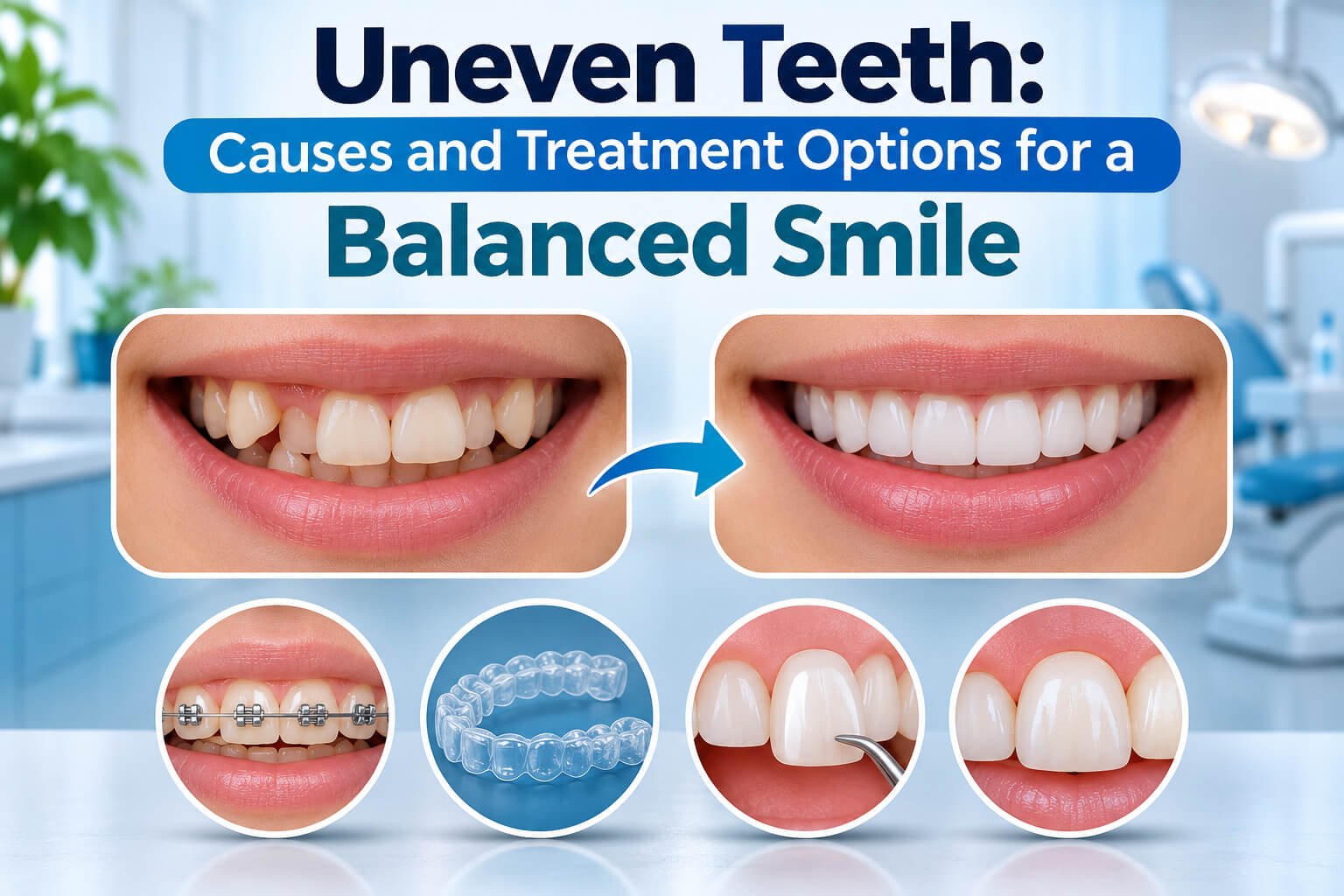
Uneven teeth are teeth that are not aligned, have different heights, spacing or shape. Some teeth may overlap, sit higher than neighboring teeth, or appear tilted. Others can have worn edges that form an uneven smile.

When you observe any alterations in your tooth position, sensitivity, or bite, you may want to seek a dental examination. Searching for a dental clinic in near me can help you explore local options for an examination and personalized treatment recommendations.

Common Causes of Uneven Teeth

Uneven teeth may be caused by a number of factors and knowing the cause can be used to find the most appropriate treatment.

  1. Genetics and Jaw Structure

Genetics can influence tooth size, jaw shape, and the space available for permanent teeth. Crowding can take place when the teeth are bigger than the jaw space. Alignment can also be influenced by a smaller jaw or inherited bite differences.

  1. Childhood Habits

Extended thumb-sucking, tongue-thrusting, and prolonged pacifier sucking can have an impact on developing teeth and jaws. When these habits are sustained over a long time, they may lead to gaps, protruding front teeth or bite problems.

  1. Premature Tooth Loss

Early loss of a baby tooth may enable adjacent teeth to move into the vacant area. Likewise, the loss of permanent teeth can lead to the gradual movement of adjacent teeth, which can influence the alignment and bite balance.

  1. Tooth Wear and Dental Injuries

Grinding or clenching can wear down tooth edges and make teeth appear uneven. The shape or position of individual teeth can also be altered by dental injuries, damaged fillings and some dental conditions.

Treatment Options for a Balanced Smile

The treatment will depend on the cause, severity and condition of your teeth. A dentist can prescribe one or a combination of methods to get a healthy, natural appearance.

  1. Braces

Conventional braces involve the use of brackets and wires to slowly move teeth into more desirable positions. They are able to treat crowding, gaps, rotated teeth, and numerous bite issues.

Braces can be appropriate to children, teens, and adults. The length of treatment depends on the severity of the case, and frequent visits to the dentist can be used to check the progress.

  1. Clear Aligners

Clear aligners are removable trays that are used to move teeth slowly. They are not as visible as conventional braces and can be taken off to eat, brush and floss.

Aligners, however, do not suit all orthodontic issues. Wearing regularly as per the instructions of the dentist is also a requirement of successful treatment.

  1. Dental Bonding

Dental bonding involves the use of tooth-colored resin to enhance the look of small chips, small gaps, or jagged tooth edges. It is not usually as invasive as other cosmetic procedures.

Bonding can offer fast aesthetic enhancement, yet the material can be stained or chipped with time and sometimes needs to be repaired.

  1. Veneers

Veneers are thin layers that are applied to the front side of the teeth to enhance the color, shape, and perceived alignment. They can assist in the treatment of chosen cosmetic issues, yet they do not treat underlying bite issues.

Certain veneers involve the loss of a little enamel, which is permanent. Before treatment, a dentist must discuss the advantages, constraints, and options.

  1. Contouring and Reshaping

In case of minor irregularities, a dentist can reshape small portions of enamel to even out irregular edges. This alternative can only be used when there is enough healthy enamel and the alterations will not make the teeth weak.

When Should You Visit a Dentist?

Consider a dental appointment if uneven teeth make brushing difficult, affect your bite, cause discomfort, or change noticeably over time. Early assessment can be used to detect issues before they get more complex.

If you are searching online for a dental clinic near me, review the dentist’s qualifications, available treatments, and patient feedback. Select a competent practitioner who clarifies your choices and offers a clear treatment plan.

Conclusion

Genetics, childhood habits, missing teeth, tooth wear, or bite-related issues can cause uneven teeth. Treatment can be braces and clear aligners, bonding, veneers, and minor reshaping. The most appropriate one will be based on your dental health and personal objectives. Before deciding on treatment, consult a qualified dentist.