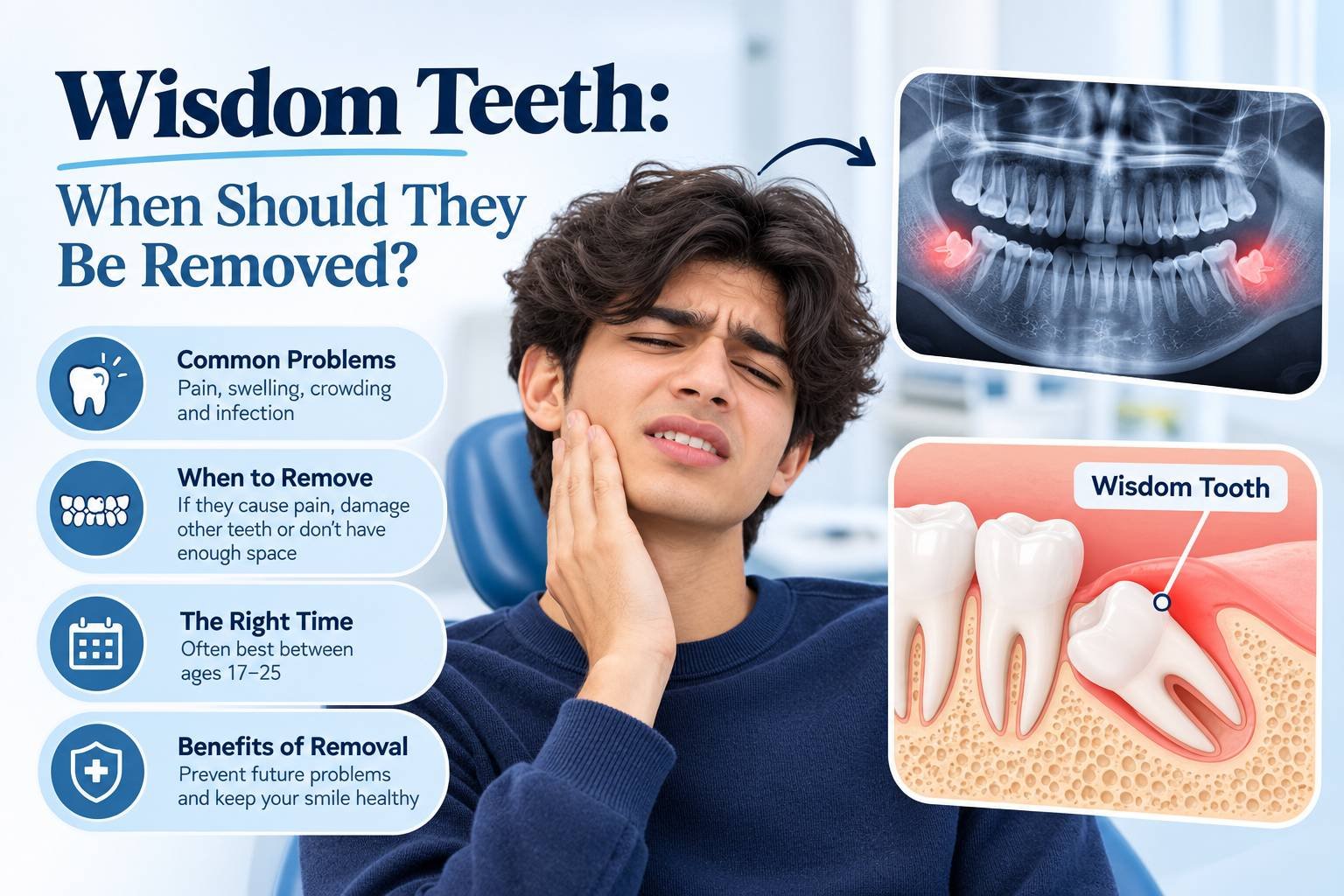
Wisdom teeth are the final molars to develop, usually appearing during the late teens or early twenties. Some erupt normally, while others become impacted or cause discomfort. Pain, swelling, infection, and crowding can be a sign of a problem. Dentists evaluate them with examinations and imaging to determine whether removal is needed.
What Are Wisdom Teeth?
Wisdom teeth are the final molars to develop at the back of the mouth. Most people have up to four, though some have fewer or none. They usually develop in the late teens or twenties. Growth can be checked in a dental clinic near me. This can influence their oral health in the future.
Why Do Wisdom Teeth Cause Problems?
Limited Jaw Space
Wisdom teeth might lack sufficient space to emerge well in the jaw. Limited space can affect their direction and position. This can cause crowding or inconvenience in surrounding areas.
Impacted Teeth
A part or a whole of an affected wisdom tooth could be left under the gum. It can develop at an abnormal angle. A dental clinic near me can evaluate its position through examination and imaging.
Difficult Cleaning
Wisdom teeth may or may not be easily brushed and flossed due to their partially erupted nature. Food and bacteria may collect around the gum. This can increase the risk of inflammation, decay, and infection.
Pressure on Nearby Teeth
When a wisdom tooth grows, it can push against the adjacent molars. This may complicate cleaning and lead to discomfort. A dental clinic in near me can evaluate potential damage.
When Should Wisdom Teeth Be Removed?
Wisdom tooth extraction can be indicated by certain symptoms and dental complications. These red flags can be used to know when professional assessment is necessary.
Recurrent Pain: Removal can be considered when the pain of the wisdom teeth recurs.
Recurring Infection: Recurrent infection of the wisdom teeth can be a sign that extraction is needed.
Severe Decay: Severe decay may render a wisdom tooth difficult to maintain.
Damage to Nearby Teeth: Impacted wisdom teeth may damage neighboring teeth or roots.
Severe Impaction: Severe impaction may cause ongoing problems and justify removal.
Signs That May Indicate a Problem
Some symptoms can indicate complications associated with wisdom teeth and need professional evaluation. A dental clinic in near me examines these indicators and prescribes the necessary treatment.
Jaw Pain: Jaw pain can be an indicator of pressure or inflammation of wisdom teeth.
Gum Swelling: Swollen gums around wisdom teeth may result in irritation or infection.
Difficulty Opening the Mouth: Opening your mouth with difficulty can be a symptom of wisdom tooth inflammation.
Bad Breath: Bad breath can be caused by food that is trapped around wisdom teeth.
Unpleasant Taste: Unpleasant taste can be a sign of infection in the area of erupting wisdom teeth.
Recurring Infection: Repeated infections around wisdom teeth may require professional dental care.
How Dentists Check Wisdom Teeth
Before advising on the removal of wisdom teeth, dentists look at the gums, jaw, and bite. Their position and development can be observed by dental X-rays. Imaging can demonstrate impaction, angling, or potential effects on adjacent structures. These results help in deciding the appropriate monitoring or extraction. Periodic assessments will help to detect issues before they worsen.
What Happens During Wisdom Tooth Removal?
A dental clinic near me can extract wisdom teeth under local anesthesia. Affected teeth might need a small surgical operation. For anxious patients, the dentist can employ sedation when necessary. Afterward, you will receive instructions for managing discomfort and protecting the area. These are the guidelines to be followed when recovering.
What Can Recovery Be Like?
Some swelling, soreness, and jaw stiffness are common after wisdom tooth removal. During recovery, your dentist can prescribe certain foods and oral hygiene. Painkillers can also be recommended as necessary. Follow aftercare guidelines to support recovery. Contact your dentist if you experience severe pain, bleeding, swelling, or fever.
When Should You See a Dentist?
Constant pain or swelling around wisdom teeth should not be overlooked. Visiting a dental clinic near me can help in early detection of underlying issues. Periodic checkups enable dentists to monitor the position and growth of the teeth. This can be done early to avoid infections or destruction of surrounding teeth. Consult when symptoms do not improve or get worse.
Conclusion
Wisdom teeth are not necessarily to be removed. Pain, infection, decay, or damage may require extraction. To explain their position and risks, a dental check and X-ray can help. Regular monitoring may be suitable when healthy wisdom teeth remain symptom-free. Professional advice will assist in deciding whether to remove or monitor.
Ready for a healthier smile? Book your appointment today with our experienced dental team!