What You Should Know Before Getting Dental Implants
Dental implants are used to restore missing teeth using a fixed restoration that is designed to act like a natural tooth. There are several steps and planning involved in implant treatment. Suitability depends on your oral health, jawbone health, medical history, and expectations. Knowing how it works can help you prepare for treatment and recovery.
How Dental Implants Work
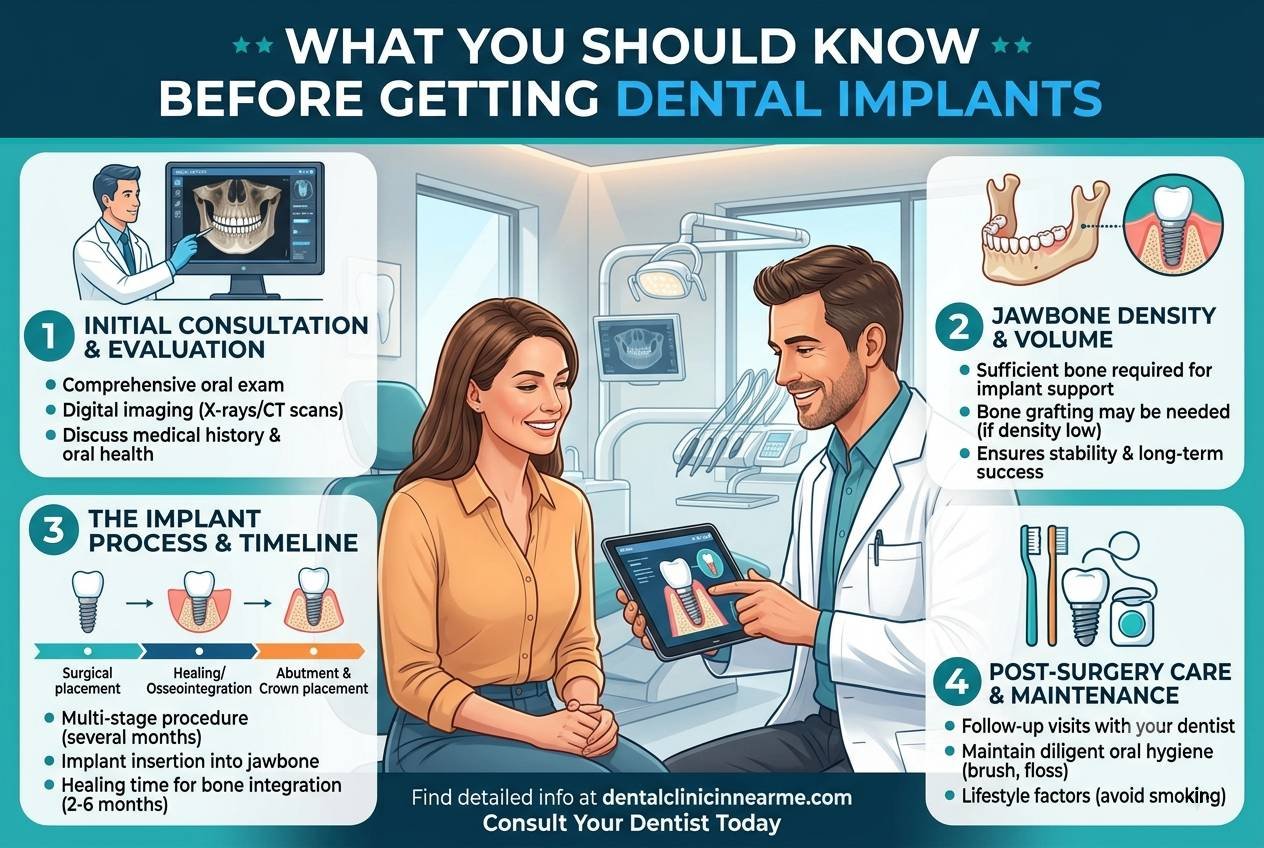
Dental implants substitute lost tooth roots with the base of artificial teeth. A titanium implant is fitted in the jawbone during treatment. An implant is connected to a crown by an abutment after healing. This restores chewing and appearance. A dental clinic near me can assess whether implants suit your needs.
Are You a Suitable Candidate?
Gum Health
Before the implant treatment, the gum health must be evaluated. Good gums provide a more favorable base for supporting the surrounding tissues.
Jawbone Condition
Jawbone condition influences the stability of implants and placement planning. Imaging can assist dentists in determining whether there is sufficient bone to support the implant successfully.
Overall Health
Overall health can influence healing after implant surgery. Your dentist might examine medical history, medications, smoking, and recovery aspects.
Oral Hygiene
Oral hygiene is very crucial before and after implant placement. A dental clinic in near me can offer advice on preventive care and cleaning.
Understanding the Treatment Process
Initial Consultation
The initial visit will involve an oral check-up and a treatment plan with regard to your oral requirements. A dental clinic near me can give an explanation of each step.
Dental Imaging
Before placing implants, dental imaging helps in determining the condition of the jawbone and its adjoining structures. Scans may be prescribed by your dentist to support appropriate treatment planning.
Implant Placement
The implant post is placed in the jawbone under controlled conditions. Immediately afterwards, your dentist will give you aftercare instructions.
Healing Period
This implant should then be allowed time to heal and blend with surrounding bone before final restoration is attached. Patients have different healing times.
Final Crown Placement
After healing, an abutment and a customized crown may be fitted to regain looks and functionality. Your dentist examines fit and bite.
What Does Recovery Involve?
Implant surgery may result in some soreness, swelling, or tenderness. Your dentist will give you instructions on how to clean, eat, take medication, and perform daily activities. Follow these instructions to support healing and minimize complications. Avoid disturbing the treatment area during recovery. Attend follow-up visits to ensure that healing is monitored adequately.
Implant Care After Treatment
A dental clinic in near me can inform you on how to take care of implants after the treatment. Brush twice a day and clean around the implant. Regular dentist visits can keep track of your gums and restoration. Always follow the hygiene advice given by your dentist. Report pain, swelling, looseness, or other abnormal changes as soon as they appear.
Understanding the Cost
Dental implant costs can vary based on the number of teeth and treatment complexity. Additional treatments, radiographs, and restorative supplies can also have an impact on the overall cost. Request a thorough estimate before treatment. Confirm what is included in the quoted cost. This assists you in budgeting and preventing unexpected expenses.
Choosing the Right Dental Provider
Selecting an appropriate dental provider is not just about price. There are several practical factors that can assist you in determining treatment quality. Consider these aspects before selecting a clinic for implant care.
Diagnostic Facilities: Determine the availability of proper imaging and diagnostic facilities in the clinic.
Treatment Planning: Ask how your treatment plan will be customized for you.
Sterilization Standards: Be sure that the clinic follows the high standards of hygiene and sterilization.
Follow-Up Support: Ensure that the full follow-up care is given after treatment.
Questions to Ask Before Treatment
Before treatment, clarify the questions regarding timelines, costs, risks, and aftercare. Your specific treatment plan can be explained to you by a dental clinic near me.
Treatment Timeline: How many visits will the entire implant procedure take?
Healing Period: How long will it take to heal before it is fully restored?
Treatment Alternatives: Does it have other appropriate options to replace missing teeth?
Potential Complications: What might be the complications of the implant treatment?
Aftercare Instructions: What kind of special care will be needed during recovery?
Maintenance Requirement: What are the maintenance requirements of implants?
Treatment Outcome: What outcomes can I expect from implants?
Conclusion
Dental implants may provide a stable alternative for replacing missing teeth. This treatment has to be well planned, jawbone supported, and well taken care of. A dental clinic near me can examine your oral condition and discuss your possible options. Knowing the process and cost will assist in setting realistic expectations. Regular care promotes long-term oral health.
Ready for a healthier smile? Book your appointment today with our experienced dental team!