How to Manage Dental Problems Caused by Acid Reflux
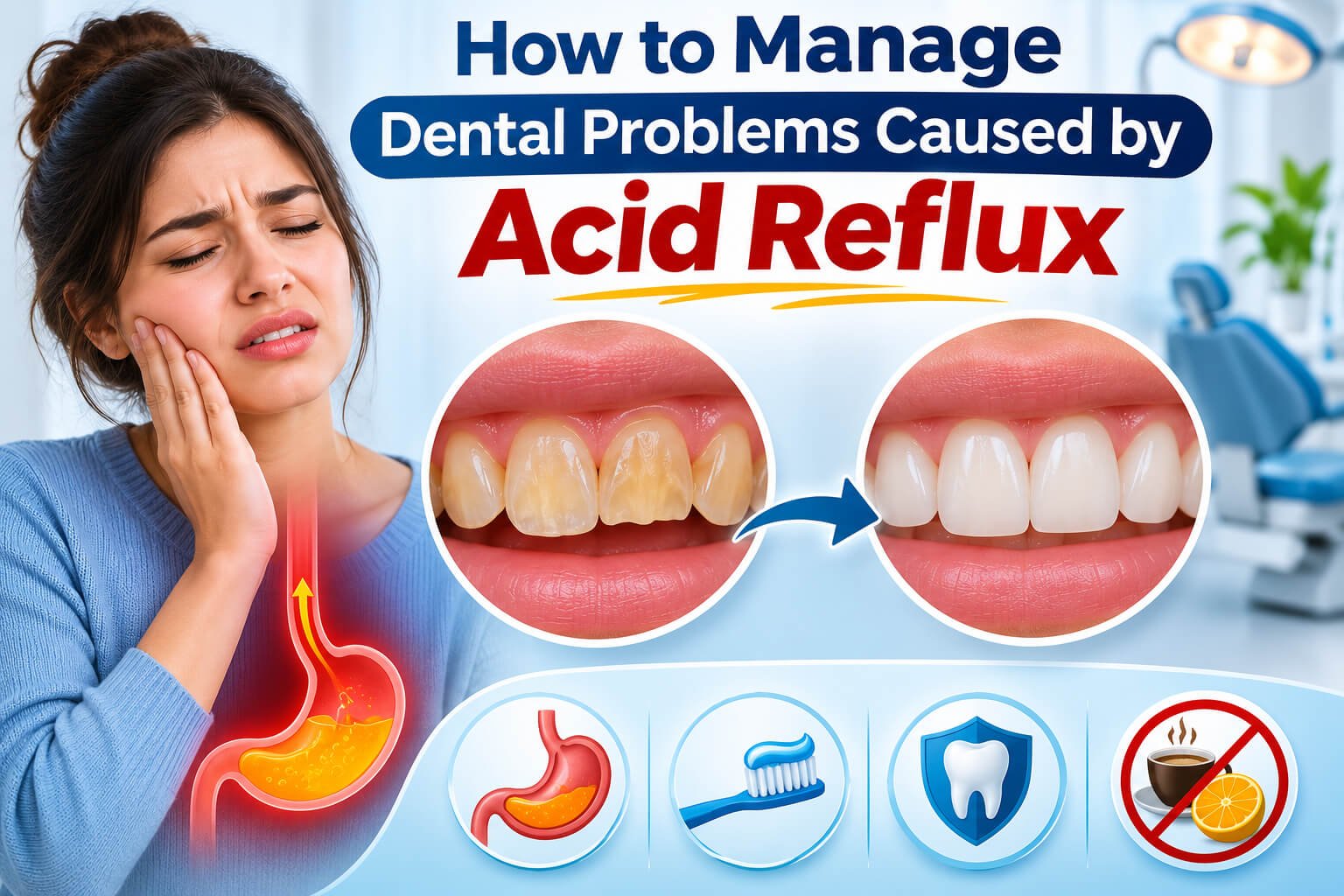
Acid reflux can affect more than your digestive system. When stomach acid travels back into your mouth, it can gradually weaken tooth enamel, increase sensitivity, and raise the risk of cavities. Understanding how to protect your teeth can help prevent lasting damage and maintain a healthy smile.
People who experience frequent heartburn or a sour taste may already have signs of acid exposure. If you notice unexplained tooth sensitivity or enamel changes, visiting a dental clinic near me can help identify possible damage and guide you toward appropriate treatment.
How Does Acid Reflux Affect Your Teeth?
Acid reflux occurs when stomach contents move upward into the esophagus and sometimes reach the mouth. Stomach acid has a low pH, which can soften and erode tooth enamel, the protective outer layer of your teeth.
Repeated acid exposure may cause several dental problems, including:
Enamel erosion: Teeth gradually lose their protective surface, making them more vulnerable to damage.
Tooth sensitivity: Hot, cold, sweet, or acidic foods may cause discomfort as enamel wears away.
Increased cavity risk: Weakened enamel offers less protection against decay.
Discoloration: Teeth may appear yellow as the underlying dentin becomes more visible.
Changes in tooth shape: Severe erosion can wear down biting edges and alter the appearance of teeth.
Recognize the Warning Signs Early
Dental problems caused by acid reflux can develop gradually. You might notice sensitivity while drinking cold water or discomfort when eating citrus fruits. Your teeth may also look smoother, thinner, or more yellow than usual.
Some people experience bad breath, dry mouth, or a persistent acidic taste. However, these symptoms can have several causes, so they do not automatically confirm enamel erosion.
If you notice ongoing sensitivity or visible changes, consult a dentist for an examination. Searching for a dental clinic in near me can help you find professional guidance about identifying acid-related damage and protecting your remaining enamel.
Improve Your Daily Oral Care Routine
Good oral hygiene can reduce additional damage, although it cannot restore enamel that has already worn away. A few simple habits can make a meaningful difference.
Wait before brushing: After acid reaches your mouth, enamel temporarily softens. Wait around 30 to 60 minutes before brushing to reduce the risk of abrasion.
Rinse with water: Swish plain water around your mouth after reflux episodes to help clear away residual acid.
Use fluoride toothpaste: Fluoride strengthens enamel and supports its resistance to future acid attacks.
Choose a soft-bristled toothbrush: Gentle brushing helps clean your teeth without unnecessary wear.
Avoid aggressive brushing: Use small, gentle movements instead of scrubbing your teeth forcefully.
Manage Acid Reflux Through Lifestyle Changes
Reducing reflux episodes can limit how often stomach acid reaches your teeth. Consider making practical changes to your eating and sleeping routines.
Eat smaller meals and avoid lying down for at least three hours after eating. Large meals can increase pressure on the stomach and encourage reflux. Identify personal triggers, which may include spicy foods, citrus fruits, chocolate, coffee, or high-fat meals.
If reflux occurs at night, elevating the head of your bed may help reduce symptoms. Avoid smoking, and consider limiting alcohol if either worsens your reflux.
Persistent symptoms deserve medical attention. A healthcare professional can recommend suitable treatment, including medication when necessary. Managing the underlying condition is an important part of preventing further dental damage.
Dental Treatments for Acid-Related Damage
The right treatment depends on how much enamel erosion has occurred. Your dentist may recommend fluoride treatments to strengthen weakened enamel and reduce sensitivity.
For more noticeable damage, options may include dental bonding, fillings, or crowns. These treatments can protect vulnerable areas, restore tooth structure, and improve appearance. If sensitivity continues, your dentist may also suggest desensitizing products.
Regular examinations allow your dentist to monitor changes and adjust your treatment plan. When choosing a dental clinic near me, look for a qualified dental professional who can assess enamel erosion and coordinate care with your medical provider when needed.
When Should You See a Dentist?
Do not ignore persistent sensitivity, chipped teeth, unexplained discoloration, or discomfort when chewing. Early assessment can help prevent minor enamel damage from developing into more complicated dental problems.
Seek medical advice if acid reflux occurs frequently, disrupts your sleep, or continues despite lifestyle changes. Difficulty swallowing, persistent vomiting, bleeding, or unexplained weight loss also requires prompt medical evaluation.
Conclusion
Acid reflux can gradually damage tooth enamel, but timely care and consistent habits can help protect your smile. Rinse your mouth after reflux episodes, wait before brushing, use fluoride toothpaste, and address the underlying digestive problem.
Regular dental visits are equally important for detecting erosion and choosing suitable treatments. By combining preventive oral care with effective reflux management, you can reduce further damage and maintain healthier teeth over time.
Ready for a healthier smile? Book your appointment today with our experienced dental team!