Dental Implants vs Dentures: Understanding Your Tooth Replacement Options
Tooth replacement can enhance chewing, speech, appearance, and daily confidence. Two methods of replacing lost teeth are dentures and dental implants. Both approaches have varying treatment requirements, advantages, and maintenance needs. Suitability can depend on your oral health and the state of your jawbone. Being aware of these distinctions will enable you to discuss options with your dentist.
How Dental Implants Replace Missing Teeth
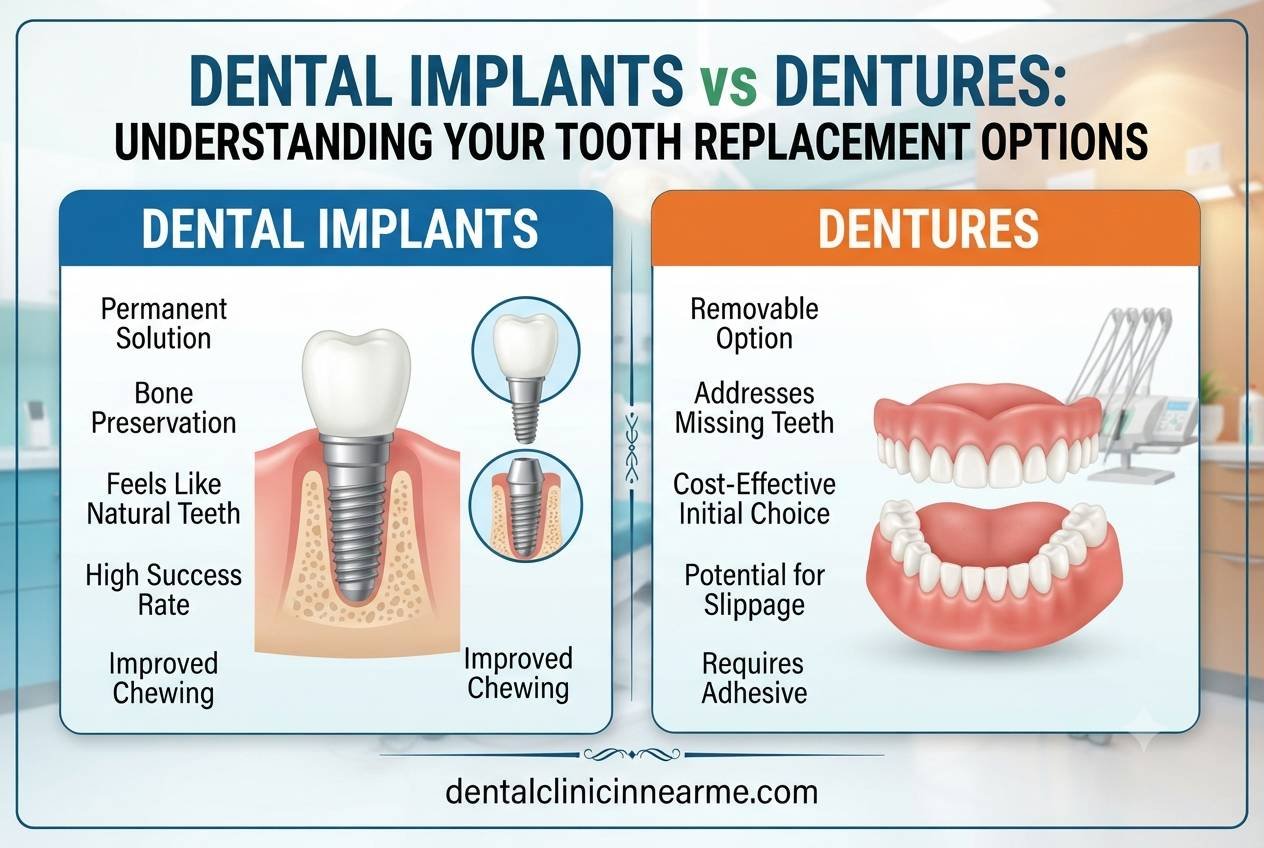
Dental implants involve small posts that are inserted into the jawbone to substitute missing tooth roots. After healing, they bear customized crowns that reestablish the look and functionality. This fixed style may be more natural than detachable ones.
A dental clinic near me can assess bone health, gum condition, and overall suitability. Treatment can consist of multiple phases. Recovery time varies by individual.
Understanding How Dentures Work
Dentures are removable devices that are employed to replace the lost teeth and tissues. Complete dentures involve replacing all the teeth in an arch. Partial dentures replace several missing teeth when some teeth remain.
Modern dentures may appear natural and provide chewing. They need to be cleaned and stored properly on a daily basis. Some people need time to adjust to speaking and eating with them.
Comparing Comfort and Stability
Implant Stability
Implants are fixed into the jawbone and offer stable support when chewing and speaking. They usually feel safe in their daily activities. Oral cleaning and dental examinations are significant for long-term care.
Denture Movement
Removable dentures are attached to the gums and can be slightly moved when chewing or speaking. Fitting is important to enhance stability and comfort. A dental clinic near me can evaluate whether adjustments are needed for a better fit.
Daily Comfort
Comfort depends on oral health, appliance design, and how quickly you adapt. The final restoration can be attached only after the implants have healed. Dentures also require some adaptation before they can be used comfortably.
Implant-Supported Dentures
Implant-supported dentures combine removable convenience with additional stability. Minor implants are used to ensure the denture is firmly held during day-to-day activities. They may be used when conventional dentures fail to provide stability or comfort.
Comparing Treatment Time and Maintenance
Treatment Timeline
Dental implants often require multiple stages because the implant needs time to heal before final restoration. Depending on extractions and personal needs, dentures can be completed earlier. Your dentist can discuss the expected treatment schedule.
Daily Cleaning
Both options need frequent maintenance to be comfortable and functional. Implants require brushing, flossing, and checkups, while dentures have to be cleaned and stored properly every day. Regular maintenance helps enhance long-term oral health.
Follow-Up Care
Frequent dental visits are useful to evaluate comfort, oral hygiene, and the state of your restoration. Dentures might require regular modifications, while implants need professional care. Follow-up care can be provided by a dental clinic in near me.
Future Adjustments
Dentures may require relining, repairing, or replacement as the mouth changes with time. Implants can require maintenance or restoration replacement when components wear. Depending on the fit, comfort, and functionality, your dentist can suggest appropriate changes.
Which Option Is More Suitable?
The decision between implants or dentures can be affected by several factors. A dental clinic near me would be able to assess your replacement needs individually.
Number of Missing Teeth: The number and location of missing teeth can influence suitable replacement options.
Jawbone Health: Sufficient jawbone support may be important when considering dental implant treatment.
Budget: Before making a decision, compare the initial costs, maintenance costs, and the estimated future treatment needs.
Personal Preferences: It is important to consider your personal preference of whether you would like a fixed solution or removable teeth to make it convenient on a day-to-day basis.
Cost and Long-Term Considerations
A dental clinic near me can clarify the expected cost of treatment. Surgery can be costly because of implants. Dentures might be cheaper in the short run, but subsequent treatment is expensive.
Compare long-term costs rather than focusing only on price. Both options may differ in terms of maintenance requirements. The final cost might be affected by your oral health.
Why Professional Evaluation Matters
The decision between dentures and implants depends on a dental check-up. Your dentist is able to evaluate your gums, remaining teeth, jawbone, bite, and oral health. Medical history can also determine which choice is appropriate.
Talking about what you expect and how much you have to spend can be a way of refining the options. An assessment can determine issues before treatment. It assists you in knowing the timeline, maintenance, and long-term considerations.
Conclusion
Dental implants and dentures can both be used to restore function and appearance after tooth loss. All options possess varying advantages, expenses, and maintenance requirements. An oral health and treatment objective can be evaluated by a dental clinic in near me. Consider long-term comfort, stability, and ease before making a decision. Professional advice may help in making a confident decision.
Ready for a healthier smile? Book your appointment today with our experienced dental team!